

Caravan to Midnight
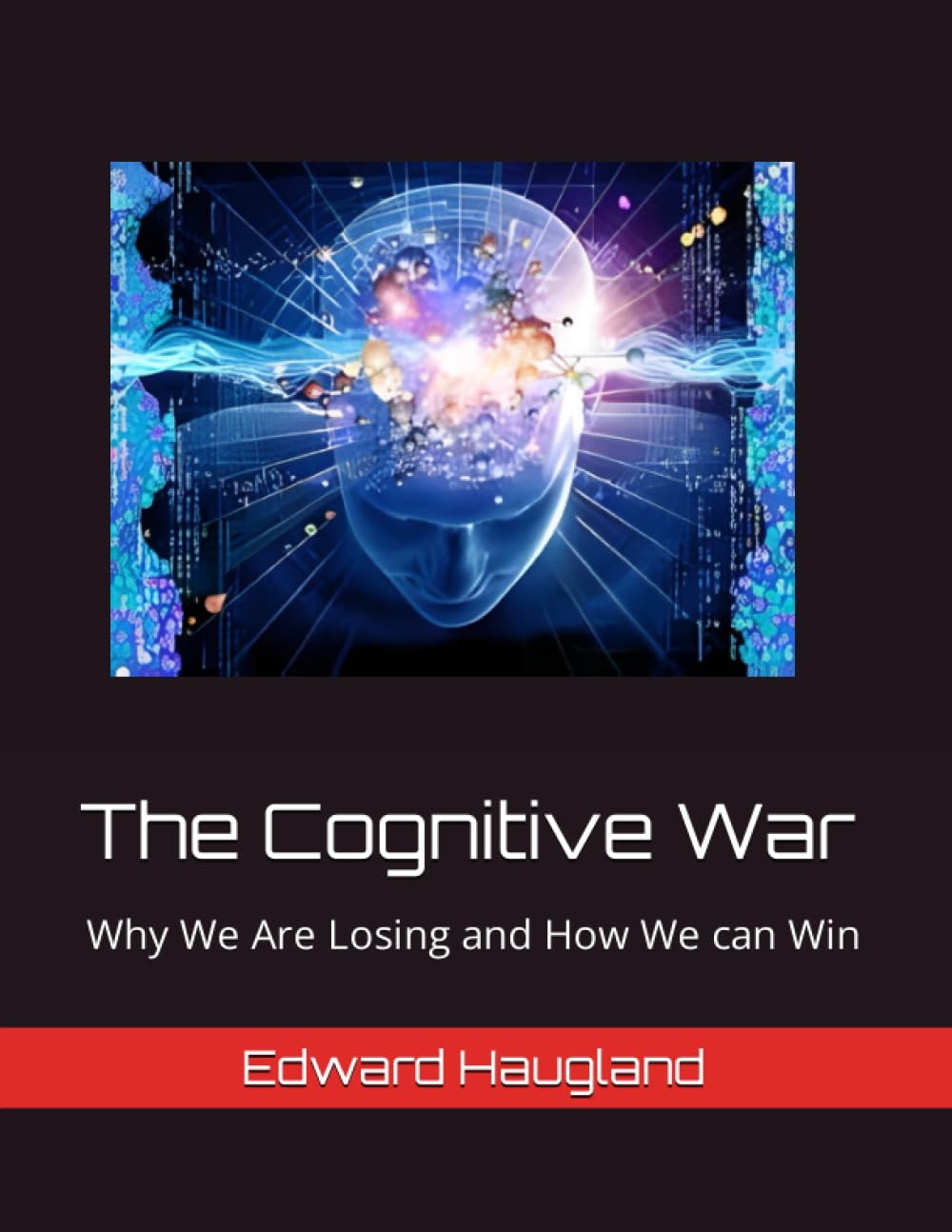
The Cognitive War: Why We Are Losing and How We can Win
The Cognitive War: Why We Are Losing and How We can Win
Impossible de charger la disponibilité du service de retrait
The Cognitive War: Why We Are Losing and How We Can Win.
“This book details the ongoing Cognitive War (both domestic and global), a warning for all ages, why we are losing, the theory behind this war to operations, and how we can win.”
It is, the description continues, “primarily an ideological war, between tyranny and freedom, control and independence, subjugation, and democracy.”
Publisher's descriptionA war that does not end.
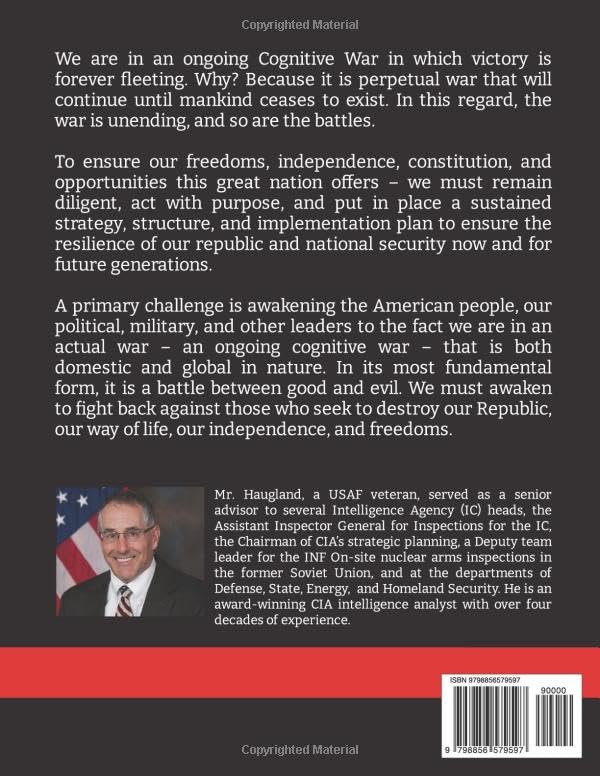
“We are in an ongoing Cognitive War in which victory is forever fleeting. Why? Because it is perpetual war that will continue until mankind ceases to exist. In this regard, the war is unending, and so are the battles. The reality is evil does exist in this world, and it is persistent in its efforts – we cannot ignore it, hide from it, or defeat it unless we act with purpose and remain resolved.”
“Too many Americans take our freedoms for granted, have short memories, do not study history, and quickly fall into one or more of the four buckets of despair – they become complacent, compliant, complicit, corrupt, or a mixture of the latter.”
— Edward Lawrence Haugland, The Cognitive WarFour decades inside the agencies he writes about.
Edward Haugland is a retired federal Senior Executive and US Air Force veteran with over four decades of service, including as a senior leader in the Intelligence Community and at the Department of Defense, Department of Homeland Security, Department of Energy and Department of State.
He served as senior advisor to several Intelligence Community agency heads, as Assistant Inspector General for Inspections for the Intelligence Community, as Chairman of the CIA's strategic planning, as a deputy team leader for the INF on-site nuclear arms inspections in the former Soviet Union, and as an award-winning CIA intelligence analyst.
Author biography as publishedWhatever you make of the thesis, the credentials behind it are unusually specific — this is a career insider writing about the machinery he spent forty years inside.
The shelf behind the broadcast.
Twelve years and 2,800 episodes of guests do not come from nowhere. This shelf is where a good deal of it starts — the books that keep turning up in conversations on the show, recommended because they were useful rather than because somebody was promoting them.
Some are centuries old. Some were published this decade. They are here because they reward the kind of reader who writes things down and goes and checks.
